Morrisite.org › Places › Deer Lodge Valley
Deer Lodge Valley
Powell and Deer Lodge counties, Montana. The longest-lived center of the movement, and the Lord’s House at Racetrack, the last Morrisite church standing.
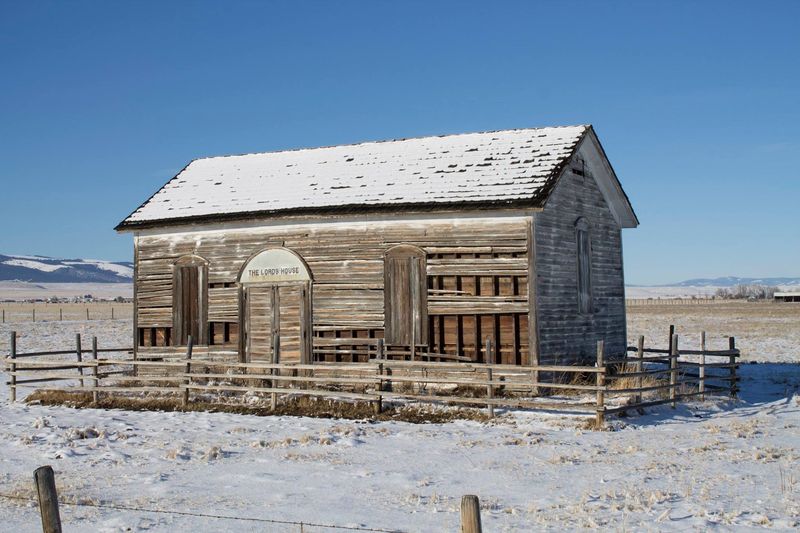
The longest-lived center of the movement. The wood-frame Morrisite church, begun in 1877, still stands on private land at Racetrack, about 8 miles south of Deer Lodge: on the north side of Dempsey Road, just west of the railroad and the Interstate 90 frontage road (Exit 195; about 46.29° N, 112.75° W; NE¼ sec. 8, T6N R9W, Powell County; until 1901 this was Deer Lodge County, the county named in older records and in this guide’s photograph captions). The county lists it as a frame building of 18 by 36 feet (Montana Cadastral, Montana State Library, consulted November 6, 2026). It was last photographed for this guide in August 2020. Called the Lord’s House, as the panel over its doors reads, it was the church’s meeting place: George Thompson was elected president of the church there in 1886, and Andrew Hendrikson (1886–1921) and George Johnson (1921–1954) presided over the Montana church from it. It is the only Morrisite church building known to survive, and its condition has worsened markedly since 2009. See the condition record under Images.
The Deer Lodge paper, the New North-West, spoke well of its Morrisite neighbors. In June 1878 it reported that the post office at Gwendale, Deer Lodge County, had been renamed Morristown, and that “as many of the people are Morrisites” they would likely take to the name. In 1883 it called the settlements on Warm Springs Creek and the upper Deer Lodge River “largely composed” of Morrisites and praised them as industrious, hospitable and law-abiding; in 1885 it noted “a large number of Morrisites in this valley” (New North-West, June 7, 1878, p. 3; April 13, 1883, p. 2; October 30, 1885, p. 3; see Newspapers). The paper’s notices place Gwendale in the upper Deer Lodge valley, near Warm Springs and Lost Creek. It was school district No. 6; in April 1875 “the citizens of Upper Deer Lodge Valley” met at the Gwendale school house on the railroad question, with Morgan Evans in the chair and a W. Watkin Thomas on the resolutions committee; Gwendale primaries were held at Wier’s store; and a smelter there began work in August 1877 (New North-West, April 16, 1875, p. 2; June 18, 1875, p. 3; August 31, 1877, p. 3). Morgan Evans, whose land later became Anaconda, gave Gwendale as his address. By 1883 the same school district, No. 6, was called Willow Glen, with Peter Jessen, a Gwendale man since the 1870s, as a trustee and J. I. Eardley as clerk (New North-West, May 4, 1883, p. 3). In March 1880 the land office listed Warm Springs settlers whose homestead claims were held up while it decided whether the ground was mineral land; among them were Daniel James and William P. Thomas, on Warm Springs Creek east of where Anaconda was built (secs. 33 and 34, T5N R10W), and Morgan Evans and Peter Jessen, in sec. 9, T4N R10W, near today’s Opportunity (New North-West, April 30, 1880, p. 4); all four claims were patented as homesteads in 1880–81. In January 1882 the paper reported that John R. Eardley, formerly of San Francisco, had built a store at “Daniel James’ corner, Warm Springs settlement,” and that the neighborhood had petitioned for a post office there “to be called Willow Glen”; in March it reported his appointment as postmaster “at Willow Glen on Warm Spring creek, where the Gwendale postoffice formerly was” (New North-West, January 20, 1882, p. 3; March 10, 1882, p. 3). Gwendale, renamed Morristown in 1878, and Willow Glen were thus successive post offices for the same neighborhood, between Anaconda, Opportunity and Warm Springs. The exact site of the Gwendale school house is still not known.
View onlyThe church is privately owned, unsafe and not open to the public. View it from Dempsey Road or the frontage road; do not enter the property.
Places on the ground
Sites named in the sources, with how precisely each can be placed. Solid markers are located; outlined markers are approximate; squares are land patents, drawn at the quarter-section or section the patent names. Sites not yet located are listed without a marker. Most of these places are private land today. If you know where one of these places stood, please write.
“Willow Glen Ranch” near Opportunity, shown in gray, is the later company stock farm of that name (burned in 1963), not the Willow Glen of 1882.
- The Lord’s House, Racetrack Located 1877–1969 map
The church of the Montana Morrisites, begun in 1877, on the north side of Dempsey Road just west of the railroad and the Interstate 90 frontage road (NE¼ sec. 8, T6N R9W, Powell County). George Thompson was elected president of the church here on May 10, 1886. It is the only Morrisite church building known to survive. Don Cornelius, who saw it in 1962, dated it to 1878 and described a building of planed lumber, once painted white, with “THE LORD’S HOUSE” lettered above its double doors, standing in a pasture; Julie A. Wright gives its dedication as 1879. Privately owned and unsafe: view it from the road only.
Sources: Montana Cadastral, Montana State Library, consulted November 6, 2026; Anderson, Revisited; Don Cornelius, “Mormonism in Montana, 1847–1898” (M.A. thesis, Montana State University [now the University of Montana], 1962), pp. 63–64; Julie A. Wright, “Mormon Movement to Montana” (M.A. thesis, University of Montana, 2004), p. 37. See the photographs under Images. - Homesteads and land entries, Racetrack to Deer Lodge Located 1871–1905
Federal land patents to Morrisite families cluster along the river between Racetrack and the town of Deer Lodge (T6N–T9N, R8W–R9W). The earliest is Niels R. Beck’s preemption entry, patented in 1871. On the map each patent is a square at the quarter-section or section it names: that locates the land, not the house. Most of it is privately owned today.- Niels R. Beck, 1871 (preemption, cash): SE¼ sec. 34, T8N R9W
- Lars C. Hansen, 1873 (agricultural college scrip): NE¼ sec. 34, T8N R9W
- Ole Olsen, 1876 (agricultural college scrip): NW¼ sec. 26, T8N R9W
- Lars Olsen, 1876, 1884 (scrip; cash): NW¼ sec. 27, T8N R9W
- William Richardson, 1876 (agricultural college scrip): NW¼ sec. 21, T7N R9W
- James Richardson, 1880 (agricultural college scrip): SW¼ sec. 16, T7N R9W
- Anders Hansen, 1883 (cash): NW¼ sec. 33, T9N R9W
- Eric Eliasson, 1888 (homestead): SW¼ sec. 4, T6N R9W
- Margaret Eliasson, 1888 (cash): SW¼ sec. 11, T7N R9W
- Lars C. Hansen, 1890 (cash, 634.84 acres): sec. 6, T7N R8W
- Anders Christofferson, 1891 (homestead): NE¼ sec. 28, T8N R9W
- Niels Hansen, 1896 (patent): NE¼ sec. 32, T9N R9W
Sources: Bureau of Land Management, General Land Office Records (glorecords.blm.gov); section lines from the BLM National PLSS dataset. - Willow Glen: the post office and the old log church Approximate 1882 (the church earlier) map
Eliza Eardley Hardin remembered that in August 1881 her family, from California, built a log store at a crossroads where the road to Philipsburg left the Butte stage road, named it Willow Glen, and had it made a post office. The Deer Lodge paper dates the store to January 1882, when John R. Eardley, formerly of San Francisco, had built it at “Daniel James’ corner, Warm Springs settlement” and neighbors had petitioned for a post office there, and his appointment as postmaster to March 1882, “at Willow Glen on Warm Spring creek, where the Gwendale postoffice formerly was.” Daniel James held two tracts in section 33, T5N R10W: the SW¼, his homestead (patented 1880; see Gwendale, below), and the E½ NW¼ (patented 1872). Hardin also remembered “an old log church and a large fenced yard” near the crossroads, and next to it the home of William James, the Morrisites’ local president. The paper’s list of paid subscriptions in September 1886 names “Daniel James, Sr.” and “Wm. M. James,” both of Willow Glen; whether they were related is not known. The church was very probably the Willow Glen Meeting House on Warm Springs Creek where the church court met on May 10, 1882, and sustained James as president. In September and October 1896 Latter-day Saint missionaries met the Morrisites at Willow Glen; they found them well read in scripture, and “Apostle Eardly” thanked the elders for their visit (Butte District manuscript history, Church History Library, as summarized by Wright). The marker is at the center of section 33, a corner of both of James’s tracts; which corner the paper meant is not known. The federal gazetteer puts the post office about a mile farther north. The church has not been located exactly.
Sources: Eliza Eardley Hardin, reminiscence, undated (received 1952), Eliza Eardley Hardin Reminiscence, SC 788, Montana Historical Society Library & Archives, Helena, Montana; New North-West, January 20, 1882, p. 3, March 10, 1882, p. 3, and September 3, 1886, p. 3; Julie A. Wright, “Mormon Movement to Montana” (M.A. thesis, University of Montana, 2004), p. 35; U.S. Geographic Names Information System, “Willowglen Post Office (historical)”; Anderson, Revisited. - Gwendale (renamed Morristown in 1878) Approximate 1874–1878 map
A settlement and post office of the upper valley with its own school house (school district No. 6), store and, from 1877, a smelter. The Deer Lodge paper reported in June 1878 that the post office had been renamed Morristown, adding that many of the people were Morrisites. In March 1880 the land office named four Warm Springs settlers whose homestead claims were held up until it decided whether the ground was mineral land: Morgan Evans and Peter Jessen, both of Gwendale, in section 9, T4N R10W, near today’s Opportunity, and Daniel James and William P. Thomas about two miles to the north, in sections 33 and 34, T5N R10W. All four claims were patented as homesteads in 1880–81; they are the squares around this marker. Of the four, only W. P. Thomas is linked to the Morrisites (probably); Jessen is not on the roll, and no Morrisite link has been found for Evans or James. The marker sits among the claims and shows the neighborhood. In 1882 the Willow Glen post office was opened “where the Gwendale postoffice formerly was,” at Daniel James’s corner (see Willow Glen, above), but which corner is not known. By 1883 the school district was called Willow Glen.- Morgan Evans, 1881 (homestead, 160 acres): W½ SE¼, NE¼ SW¼ and SE¼ NW¼ sec. 9, T4N R10W
- Peter Jessen, 1881 (homestead, 160 acres): NE¼ sec. 9, T4N R10W
- Daniel James, 1880 (homestead, 160 acres): SW¼ sec. 33, T5N R10W
- William P. Thomas, 1880 (homestead, 160 acres): N½ SE¼ sec. 33 and N½ SW¼ sec. 34, T5N R10W
Sources: New North-West, April 16, 1875, p. 2; June 7, 1878, p. 3; April 30, 1880, p. 4; May 4, 1883, p. 3; Bureau of Land Management, General Land Office Records (glorecords.blm.gov) (Evans, accession STA-MT0220__.312; Jessen, STA-MT0220__.362; James, STA-MT0220__.198; Thomas, STA-MT0220__.277); section lines from the BLM National PLSS dataset. See Newspapers. - William Price Thomas on Warm Springs Creek Approximate 1863 map
A local history names William Price Thomas, a Welshman and confidant of George Williams, among the first Morrisites in the valley, settling in 1863 on Warm Springs Creek about three miles east of where Anaconda would be built. His sons John, Evan, Frank and Daniel later homesteaded nearby. The marker follows that description only. A William P. Thomas received a homestead patent in 1880 for land in sections 33 and 34, T5N R10W, about four and a half miles east of the center of Anaconda (see Gwendale, above); that he is William Price Thomas is likely but not proved.
Sources: Patrick F. Morris, Anaconda, Montana (1997), p. 15; Bureau of Land Management, General Land Office Records (glorecords.blm.gov), accession STA-MT0220__.277. - The upper-valley congregation “near Lost Creek” Not yet located 1870s–1880s
The church in Montana was organized as two stakes in 1874. Morris places one congregation “in the upper valley near Lost Creek” and the other near Deer Lodge by Race Track Creek, each with a meeting house and a school. Lost Creek runs east past Galen to the Clark Fork, a few miles north of Willow Glen, so the upper-valley meeting house may be the Willow Glen church; this has not been confirmed. Henry Hendrickson, born in the valley in 1877, likewise remembered a second church besides the one at Race Track, “up around Lost Creek” near Anaconda. Cornelius, drawing on his 1962 interviews, says the Lost Creek church was built in 1872, soon after the group arrived.
Sources: Patrick F. Morris, Anaconda, Montana (1997), p. 16; Anderson, Revisited; Henry Hendrickson, interview by Don Cornelius, April 19, 1962, p. 2, OH 018-001, University of Montana (see Repositories); Don Cornelius, “Mormonism in Montana, 1847–1898” (M.A. thesis, Montana State University [now the University of Montana], 1962), p. 63. - Gregson Hot Springs (now Fairmont) Approximate 1860s? map
An Anaconda historian, interviewed in 1989, said the first Morrisites stayed at the hot springs later named Gregson “a winter or two” before homesteading in the valley. No earlier source for this has been found. Morris says Ben Phillips built the first house there and that Eli and George Gregson came in 1869.
Sources: Montana Standard, July 2, 1989, p. 69; Morris, Anaconda, Montana, p. 15. Unconfirmed.
In the chronology
- 1860s–Some Morrisites return to the Church of Jesus Christ of Latter-day Saints, in Utah and elsewhere. The 2006 monument at South Weber notes that a few were rebaptized and remained there. Others find a home in the Reorganized Church (RLDS): the former Morrisite apostle Mark Hill Forscutt joins it in Salt Lake City in 1865, and John L. Bear (Johann Lebrecht Bär, 1838–1919), a Swiss convert from Affoltern am Albis who emigrated from Zürich in 1860 and lost his wife and child at Kington Fort, later serves as an RLDS missionary to Switzerland and Germany, dies in Independence, Missouri, and publishes his autobiography in the RLDS Journal of History. In 1865 RLDS missionaries at Malad, Idaho, baptize several people who appear on the roll. Others join only after years in the Morrisite groups: Erick and Caroline Eliason are baptized together at Soda Springs on June 9, 1870; Margaretta Cook leaves the Morrisites in Nevada in 1870 and is baptized RLDS in 1873; and Lena Hanson, at Soda Springs and then Deer Lodge, in 1895 (see the roll).
- 1870sMany members regather in the Deer Lodge Valley, Montana, under George Williams, the “Prophet Cainan,” who claims to be Morris's successor. In 1874 the Montana church is divided into two stakes. A local history of Anaconda dates the first Morrisite settlers in the valley to 1863, among them William Price Thomas on Warm Springs Creek, east of the later townsite; has a group under William James arriving in 1867 as others left; and describes a caravan of thirteen covered wagons that came in June 1871, part of a larger migration from Iowa, Nebraska, Utah and Idaho: Scandinavian families, mostly Danes, with English, Scottish and Welsh believers. It places the two congregations in the upper valley near Lost Creek and near Race Track Creek, with about eighty members in all (Patrick F. Morris, Anaconda, Montana, 1997, pp. 15–17).
- 1877Montana Morrisites begin building a wood-frame church a mile or so below Racetrack, south of Deer Lodge.
- Jan 1879George Williams prophesies that Deer Lodge County will be the site of the Second Coming.
- 1882Williams dies, and the movement splits among rival successors. In Montana, where the church is known as the Church of Jesus Christ of Saints of the Most High, William James, its local president under Williams, is sustained in May 1882 over opposition, with Andrew Hendrikson and John R. Eardley as counselors. (Eardley, later a stake president, leaves Montana about 1900.) George Dove leads the California congregation.
- 1886At a court meeting in the Lord’s House at Race Track, Montana, on May 10, George Thompson of London is elected president of the church; eleven members who decline to sustain him are given thirty days to do so. Thompson is probably the last general president. Andrew Hendrikson, a Danish immigrant who was never a Latter-day Saint, presides over the Montana Morrisites from 1886 until his death on July 3, 1921.
- 1921–1954George Johnson, Hendrikson’s associate of more than fifty years and likewise never a Latter-day Saint, presides at the Lord’s House until shortly before his death on April 29, 1954, at ninety-eight. Anderson calls him the last official Morrisite leader.
- 1969The Church of Jesus Christ of Saints of the Most High, the last organized Morrisite body in Montana, formally disbands. According to Anderson, August 6, 1969, was the last annual Morrisite gathering. Its records, its descendants, and the Racetrack church remain.
- 1990A later claimant. Neal Chase, interpreter for Leland Jensen’s Missoula-based sect, the Bahá’ís Under the Provisions of the Covenant, publishes Ezekiel’s Temple in Montana. Drawing on Anderson’s book, he cites George Williams’s prophecy that Christ would come in the Deer Lodge Valley, identifies the Montana State Prison at Deer Lodge (where Jensen was held from 1969) as Ezekiel’s temple, and dates the fulfillment to August 9, 1969, Jensen’s first full day in prison. Anderson rejected this reading, noting that Williams named no date. The sect was not Morrisite in origin; it adopted Morrisite prophecies as confirmation of its leader’s mission.
- July 2012Descendants of Morrisite families hold a reunion in Deer Lodge; the property owners allow them to visit the Racetrack church.
- 2026Kirk Watson publishes The Morrisites: Writings and Revelations, collecting writings of Morris, Williams, Davies, and the Doves. The Racetrack church still stands, in declining condition (see the condition record under Images).
Photographs (54)
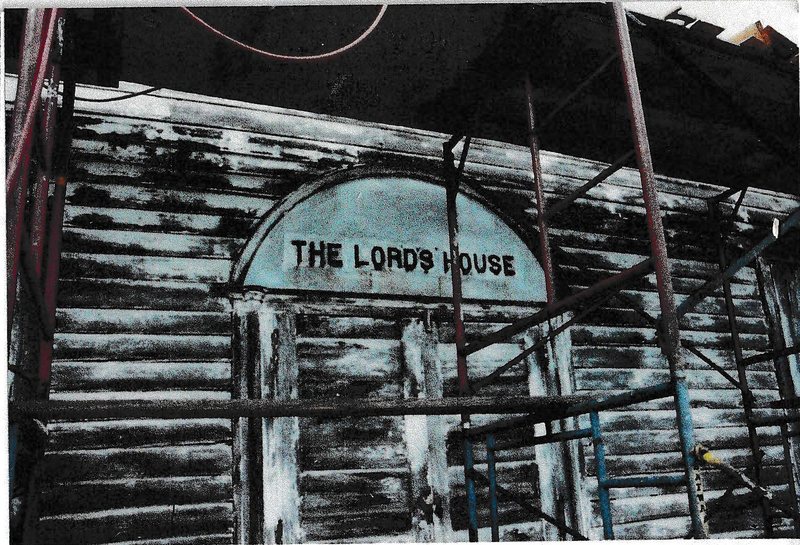 MO-IMG-063 The front of the church, with the arched panel lettered THE LORD’S HOUSE above…
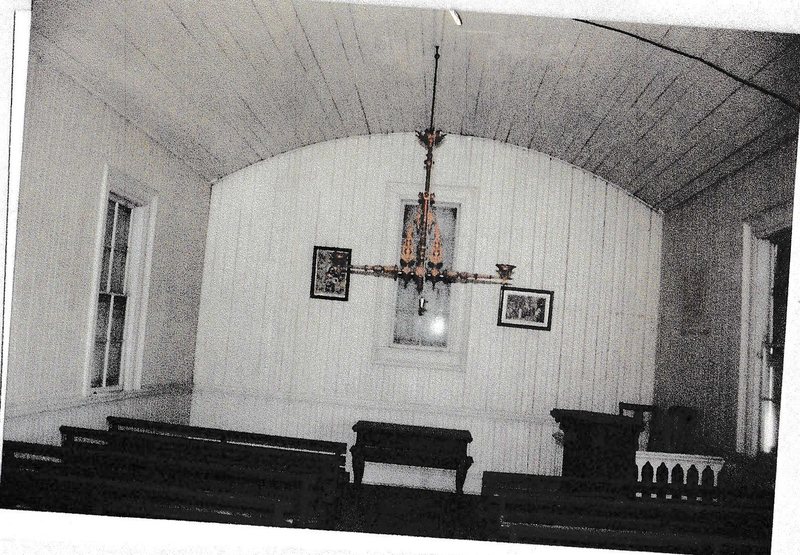 MO-IMG-064 Interior toward the pulpit end: the arched ceiling, a chandelier, a window…
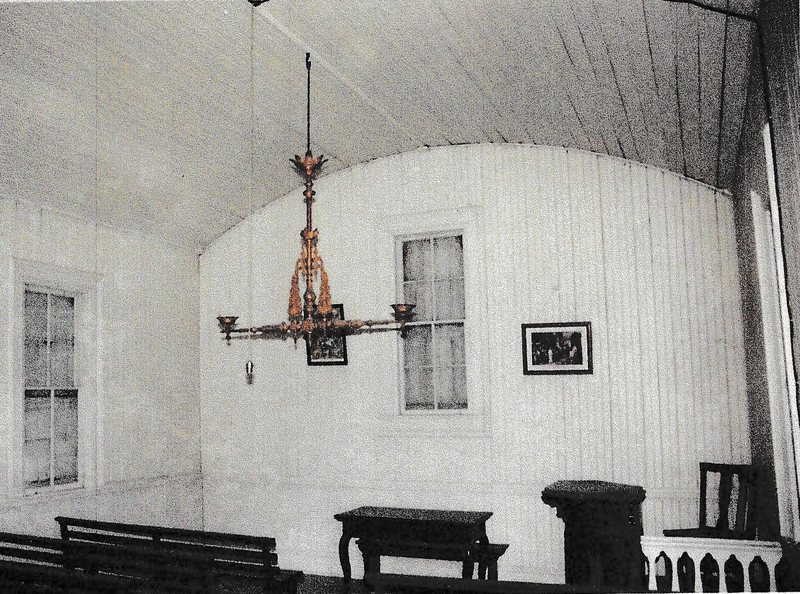 MO-IMG-065 The pulpit end from one side, with the chandelier, the table, the pulpit, and…
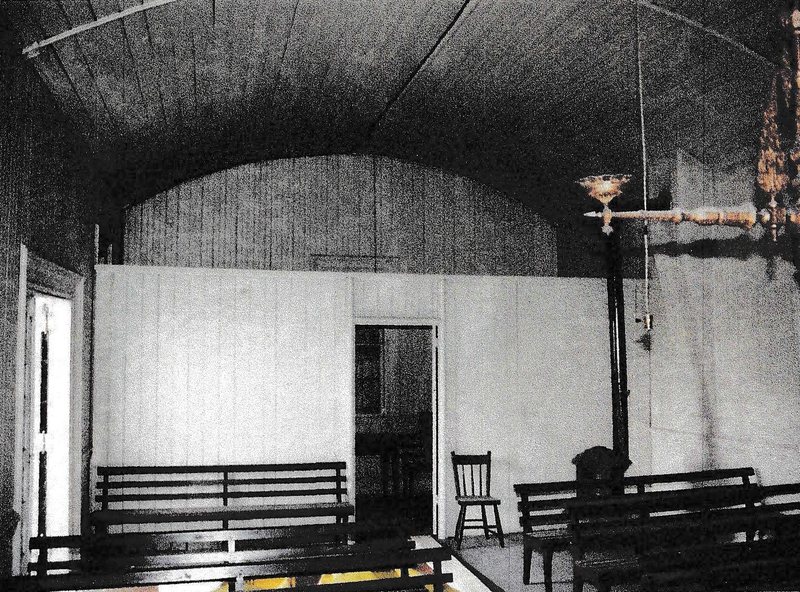 MO-IMG-066 Interior toward the other end: a board partition with a doorway, benches, a…
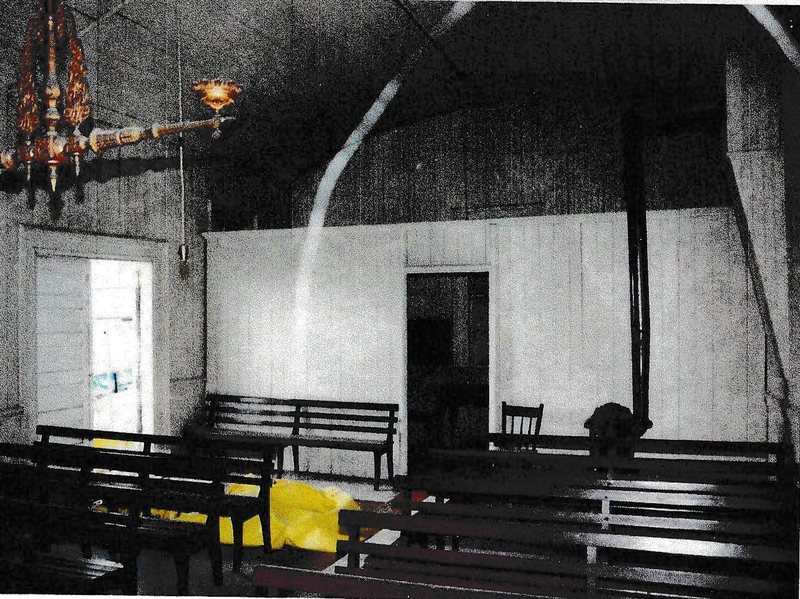 MO-IMG-067 A second view toward the partition. The pale streak is on the copy, not in the…
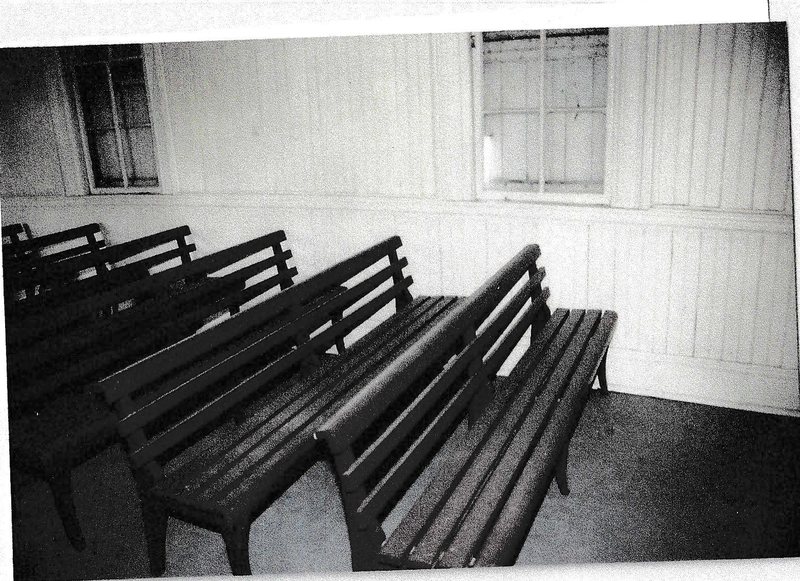 MO-IMG-068 Benches in rows below two windows. Deer Lodge County, Montana · September 5…
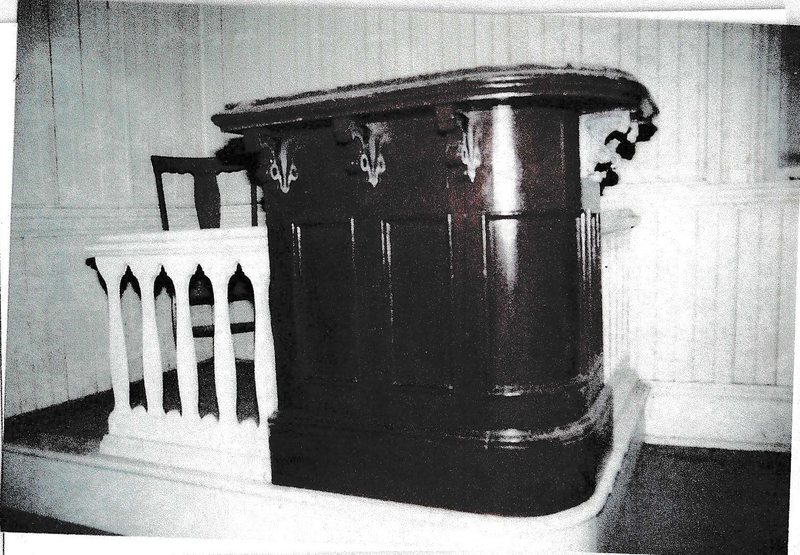 MO-IMG-069 The pulpit: dark wood with carved ornaments along its top, on a raised…
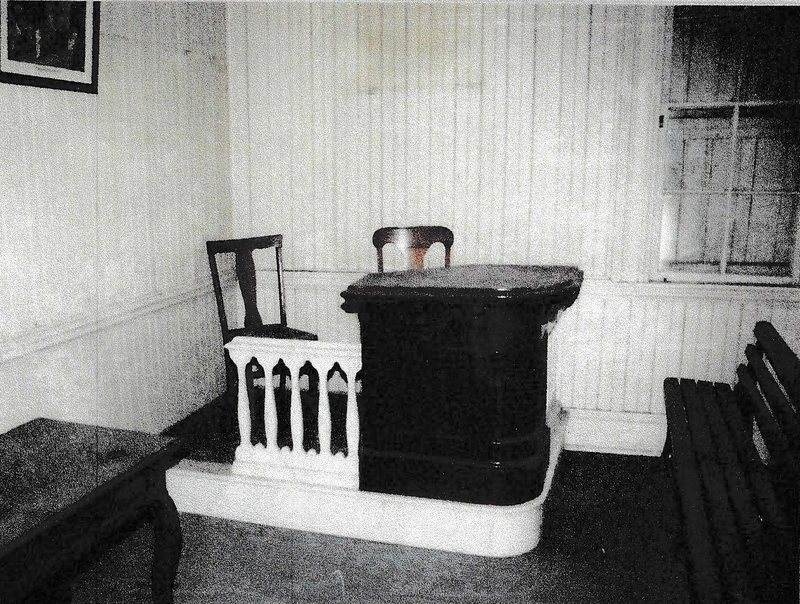 MO-IMG-070 The pulpit with two chairs behind it, the railing, a bench at the right, and…
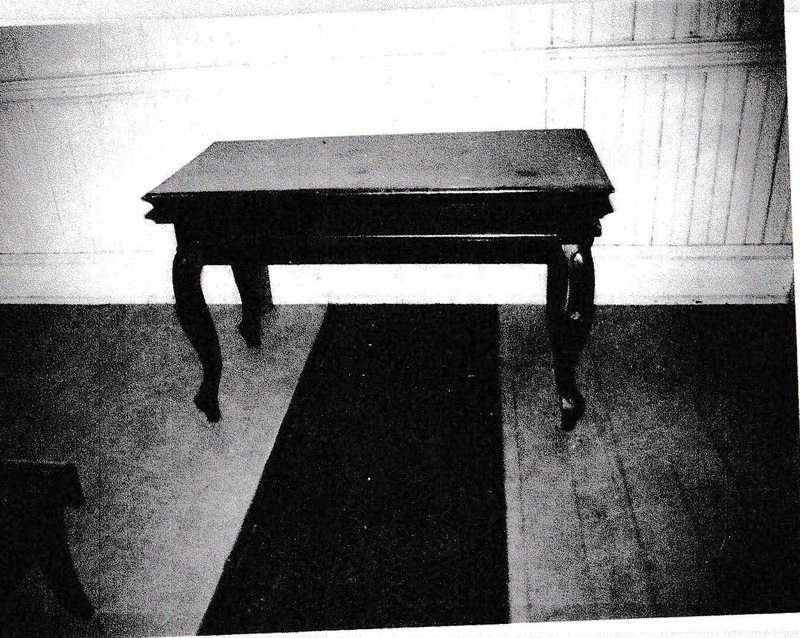 MO-IMG-071 A table with curved legs, set on a dark runner. Deer Lodge County, Montana…
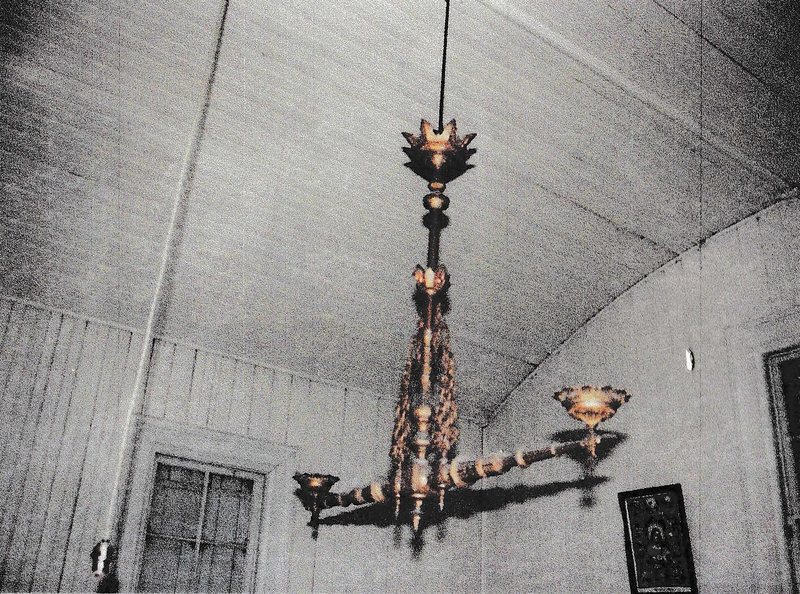 MO-IMG-072 The chandelier, hanging from the arched ceiling, with candle cups on its arms.…
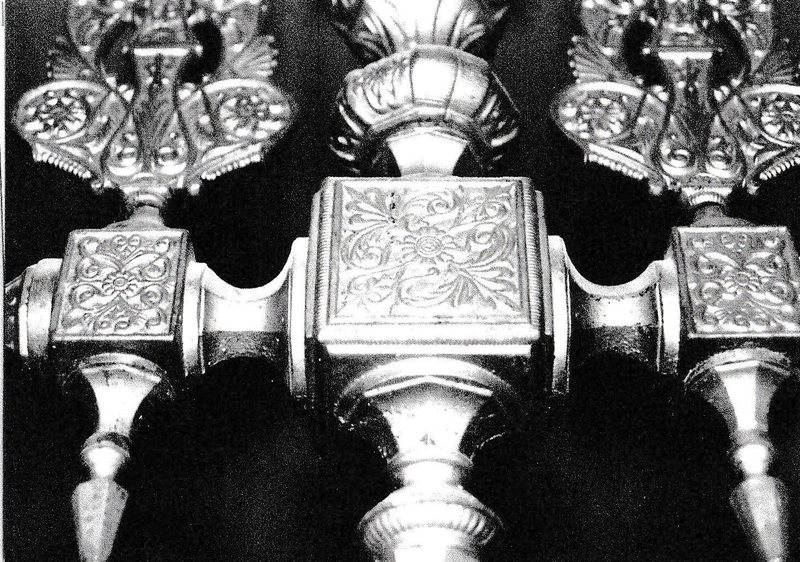 MO-IMG-073 Detail of the chandelier: ornamented square blocks, candle cups above, and…
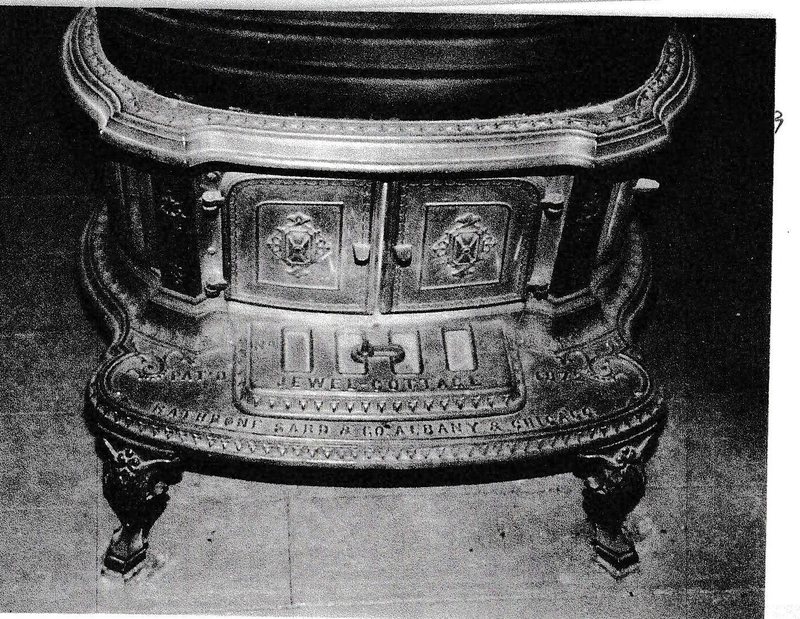 MO-IMG-074 The heating stove, a cast-iron Jewel Cottage made by Rathbone, Sard & Co. of…
Records, documents and questions
- Repositories Willow Glen photographs
- Repositories Eliza Eardley Hardin reminiscence
- Repositories Montana Homesteading Project records: the Eliason form
- Repositories Deer Lodge, Montana genealogy papers, 1860–1990
- Repositories Henry Hendrickson interview, April 19, 1962
- Repositories Diaries, letters, and federal records
- Questions Who were the Morrisites?
- Questions Who led the Montana church after George Williams?
- Questions Did the Prophet Cainan read birthrights by phrenology?
- Questions How did believers survive failed prophecy?
- Questions How did a prophet’s movement become a church run by vote?
- Questions Why were so many Morrisites Scandinavian?
- Questions How has the Morrisite story been passed down, and where do the common errors come from?
- Questions Why did some Morrisites join the RLDS Church?
In the bibliography (14)
- The Montana church ending with George Williams, or with no leaders after him. It was led by William James, George Thompson (from 1886), Andrew Hendrikson (1886–1921) and George Johnson (1921–1954), and disbanded in 1969. John R. Eardley, called an apostle in 1861, was still called “Apostle Eardly” by Latter-day Saint missionaries in 1896.
- Chase, Neal. Ezekiel's Temple in Montana. Self-published, 1990.
- Anderson, C. LeRoy. “The Scattered Morrisites.” Montana: The Magazine of Western History 26, no. 4 (Autumn 1976): 52–69.
- Anderson, C. LeRoy, and Larry J. Halford. “The Mormons and the Morrisite War.” Montana: The Magazine of Western History 24 (October 1974): 42–53.
- Cornelius, D. E. “Mormonism in Montana, 1847–1898.” Master’s thesis, Montana State University (now the University of Montana), 1962. Chapter 6, “Mormon Schismatics in Montana” (pp. 56–66), treats the Reorganized Church in Montana from 1868 and the Deer Lodge Valley Morrisites, drawing on his 1962 interviews with Henry Hendrickson and Agnes Staffanson and on Reorganized Church records. It dates the Lost Creek church to 1872 and the Race Track church to 1878, and describes the Lord’s House as it stood in 1962. Its account of the Utah years is secondhand and calls Kington Fort “Knight Fort.” His interview with Henry Hendrickson is listed under Repositories. Online
- Halford, Larry Joseph. “Mormons and Morrisites: A Study in the Sociology of Conflict.” PhD diss., University of Montana, 1972. Directed by C. LeRoy Anderson. Record (campus access only)
- Wright, Julie A. “Mormon Movement to Montana.” Master’s thesis, University of Montana, 2004. Pages 33–38 treat the Montana Morrisites and the RLDS. Drawing on the Butte District manuscript history of the Northwestern States Mission (Church History Library), it reports Latter-day Saint missionaries’ visits to the Morrisites at Willow Glen in 1896 and at Racetrack about a year later. It also summarizes a family history of Niels R. Beck (see his page). Its brief account of 1862 places the siege at Manti; it took place at Kington Fort on the Weber River. Online
- Deer Lodge County History Group. In the Shadow of Mount Haggin. A Bicentennial “Heritage” project, 1975; the cover reads Under the Shadow of Mt. Haggin. Family histories of the upper Deer Lodge Valley. The Morgan Evans family (pp. 134–137), from the notes of Katherine Evans Wellcome, has Ann Evans coming to the valley in 1865 after about eight years in Utah, living in a dugout near Gregson Springs among “a small colony there, three or four families” (later on the same page, “four or five families”), and then homesteading Gwendale Farm, about four miles north, near the present Anaconda Country Club; it dates the move to the spring of 1875. It does not say whether the Evanses or their neighbors were Morrisites. Cited by Patrick F. Morris, Anaconda, Montana (1997). New
- Morris, Patrick F. Anaconda, Montana: Copper Smelting Boom Town on the Western Frontier. 1997. Chapter 2, “Heaven on Earth” (pp. 15–17), on the Morrisites in the upper Deer Lodge Valley: William Price Thomas, William James, the 1871 wagon train and the two congregations, with letters of George Williams (“Cainan”) to John D. Eardley (1865) and William James (1879). New
- Powell County Museum and Arts Foundation, Historic Action Committee. Powell County: Where It All Began. Edited by Dorene Courchene. Deer Lodge, MT, 1989. Family and community histories of the Deer Lodge Valley, including the Morrisites at Racetrack and the Eliason, Christoffersen and Beck families (pp. 98–111).
- Progressive Men of the State of Montana. Chicago: A. W. Bowen & Co., [1902]. Biographies of Deer Lodge Valley settlers, among them Soren R. Beck (p. 1637), who worked on Niels R. Beck’s ranch from 1884. Transcription New
- Pinky II. “Last Existing Morrisite Church in the World. Racetrack, Mont.” February 17, 2026. YouTube video, 0:53. Watch
- Posey, John. “Morrisite War – Jesus in Montana?” January 11, 2022. YouTube video, 10:54. Watch
- Vickers, Marques. “Montana Morrisite Church: The Dilapidated Remnant of a Fallen Movement and Prophecy.” July 29, 2026. YouTube video, 1:58. Watch
People
People on the 1861–62 roll whose notes or pages mention this place (24). Each name links to the name index.
Astel, Esther page; Astel, Joseph page; Beck, Niels R. page; Christofferson, Andrus; Davies, William page; Eardley, John R.; Eliason, Erick page; Eliason, Karen page; Geertsen, Lars Christian page; Guhl, Soren Peter page; Hanson, Andrus; Hanson, Christian; Hanson, Lars Christian; Hanson, Mattie; Hanson, Niels; Olsen, Lars; Olsen, Ole; Rasmussen, Hans C.; Richardson, Jane; Richardson, William; Sorenson, Brooer; Thomas, W. P.; Thomas, William W.; Thompson, Emma
Others named in the sources (3).
Williams, George; Hendrikson, Andrew; Johnson, George
This page gathers entries from across the guide by the place’s names, so a few may mention it only in passing. Corrections and additions: contact@morrisite.org.
Rogers, Eric Paul, ed. “Deer Lodge Valley.” Morrisite.org. https://morrisite.org/place/deer-lodge-valley.html. Add the date you consulted it.